
Whoa! Mobile wallets used to be simple. They were just vaults in your pocket. But the Solana ecosystem grew up fast—DeFi, staking, NFTs, and on-chain rights management all landed on our phones. My first impression was: this is slick. Then my gut said: somethin’ felt off about how many people treat wallets like dumb apps. Seriously?
Okay, so check this out—there are three broad roles a good Solana mobile wallet should play: secure key custody, frictionless staking/DeFi access, and practical NFT management. Short version: if your app does only one of those well, you’re missing out. Longer version: you want a wallet that balances UX and cryptographic hygiene while keeping you in control of on-chain assets and identities. Sounds obvious. Yet in practice it’s messy, messy in a way that bugs me.
Here’s the thing. Initially I thought a mobile wallet was mostly about biometrics and a pretty interface, but then I started using it for real flows—staking small amounts, voting in DAO proposals, sending NFTs to collectors—and the gaps became obvious. Actually, wait—let me rephrase that: the gaps are usually about recovery options, transaction context, and safe dApp connections. On one hand you want one-tap swaps. On the other, you’re approving transactions with long permission scopes without a clear audit trail. Hmm…
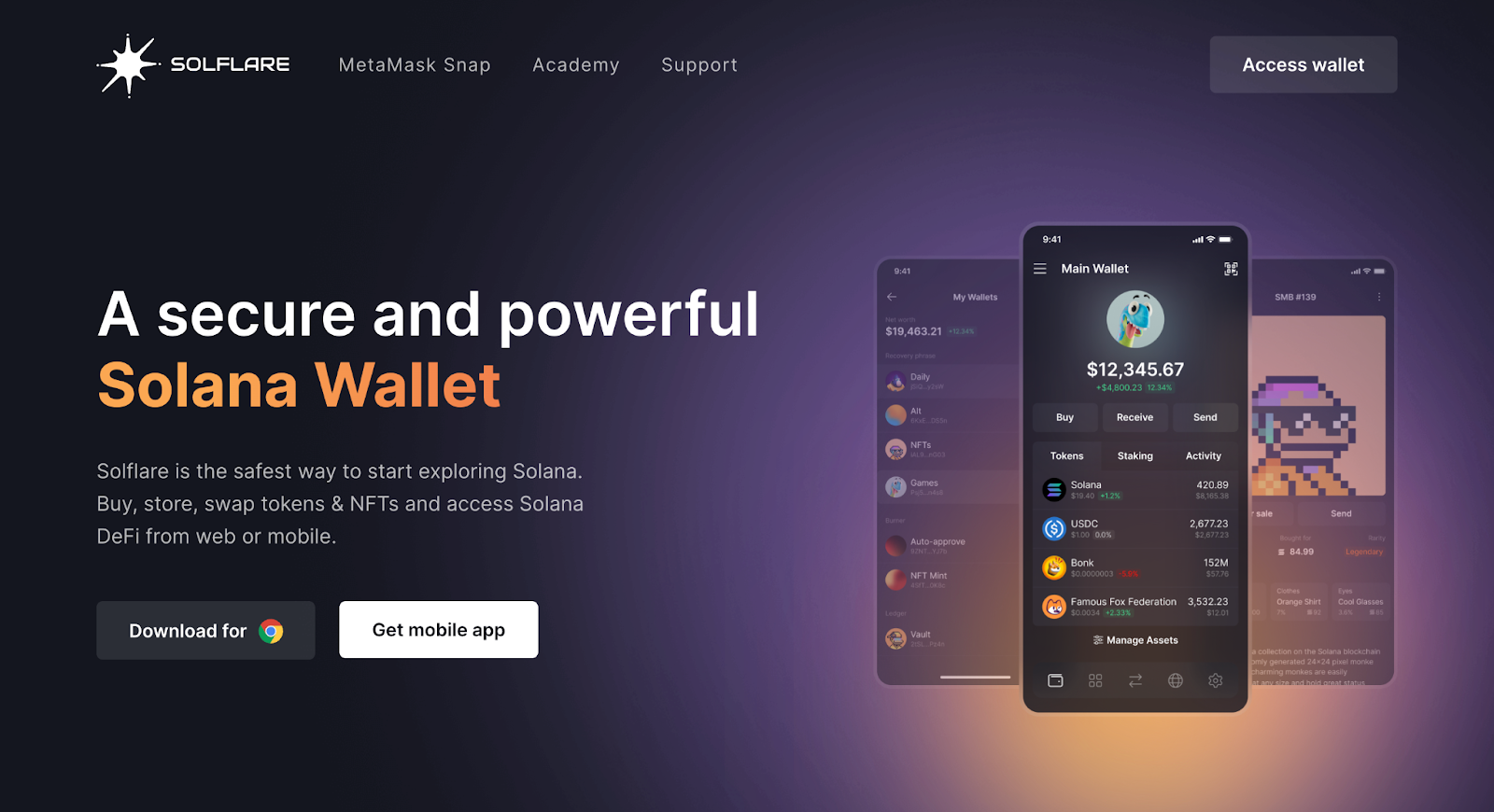
What to expect from a modern Solana mobile wallet
Fast. Low-fee swaps and confirmations that don’t make you wait. Secure. Local key storage, hardware support, and sensible recovery flows. Transparent. Transaction details, readable program names, and a way to review exactly what a dApp is asking you to do. Intuitive NFT tools. Gallery views, lazy minting support, and easy listings to marketplaces. I like to keep it practical: show me my royalty splits, show me provenance, and let me gift or airdrop without six clicks.
Wallet apps differ on how they juggle these priorities. Some optimize naive UX at the cost of security prompts. Others are conservative and make simple flows clunky. My instinct said to pick a middle road: friendlier UX that still forces a deliberate confirmation for sensitive actions. On mobile, the confirmation step should be obvious—no small-print surprises.
Security basics that actually matter (and fewer myths)
Seed phrase safekeeping is table stakes. But there’s more: always enable a strong local unlock (passcode + biometric where supported), and opt for hardware signing for high-value operations—yes, Ledger works with mobile setups. Use encrypted backups and avoid cloud-storing your seed in plaintext. Seriously, don’t screenshot your recovery phrase. That’s an invitation.
Watch-only accounts are underrated. They let you monitor cold wallets and an exchange stash without exposing keys on your phone. For multisig or enterprise flows, the mobile app should let you propose transactions and gather approvals without forcing every signer to switch devices—workflows matter.
On the myth side: you do not need to run a full node to be safe. But you should use reputable RPC providers or let the app rotate endpoints. Custom RPC choice influences privacy, and sometimes performance. If an app forces a single public RPC, that’s a red flag for decentralization around user data.
Staking and DeFi from your pocket
Staking on Solana is lightweight. Mobile wallets that surface validators’ performance, commission, and reliability make a huge difference. Want to avoid slashing risks? Solana doesn’t slash in the same way Ethereum does, but validator health still matters—uptime, commission history, and community trust. Pick validators with a track record unless you’re experimenting.
Doing DeFi on mobile needs safety rails. Transaction previews must show which program is being called, and clear token amounts, lamports, or wrapped token conversions. Some apps provide simulation results—this is huge. If your wallet gives a «simulate» report, you can avoid gas-sink mistakes or accidental token conversions.
NFT management that respects both collectors and creators
NFTs are more than images. They carry metadata, royalties, and market histories. Good wallet apps offer gallery views sorted by collection, show on-chain metadata, and let you verify creator addresses. They should also let you batch-send or create signed listings for marketplaces without leaking private keys. I’m biased, but a wallet that can sign a lazy-mint invoice or show royalty recipients before you hit send is priceless.
When transferring NFTs, check the destination contract and token standard. Solana’s token ecosystem has plenty of wrapped and proxy tokens; a thumbnail alone won’t tell you everything. My instinct said to triple-check destination addresses when gifting a rare piece—your phone screen makes mistakes easy. Oh, and by the way—if you’re listing, set clear pricing and double-check marketplace fees.
How I use a mobile wallet for a typical SOL + NFT workflow
Step 1: Open wallet and review pending notifications. Step 2: Check validator metrics and stake a portion of SOL—choose a validator with low commission and steady uptime. Step 3: Browse your NFT gallery and verify metadata. Step 4: When sending, paste the recipient address and verify the checksum or ENS-like alias if available. Step 5: Sign with hardware if it’s a high-value transfer, or use the in-app confirmation for smaller items. That simple loop prevents the sloppy late-night mistakes we’ve all heard about.
My go-to app pick
For what it’s worth, I’ve been recommending solflare when people ask for a balanced mobile-first wallet that handles staking and NFTs without feeling like a toy. It doesn’t solve every edge case, but it’s solid for collectors and casual stakers who want clear controls and decent UX.
That said, no wallet is perfect. I’m not 100% sure any single app will be right for everyone. If you run big positions, combine hardware keys and multisig. If you’re active in DeFi, use a segregated account for market-making and keep a cold stash for long-term holdings. Doing both strikes me as practical, though it takes discipline.
Practical tips and small habits that save you headaches
One: name your accounts clearly in-app. Two: label recurring dApp approvals as trusted and periodically review them. Three: set transaction limits for eager fingers—small daily caps can save you from accidental drags. Four: keep one watch-only account for marketplace bids, so you don’t expose signing keys when you only need to browse.
Also, be suspicious of unsolicited offers. Yep, that’s basic. But phishing now uses deep-linking and fake RPC popups. If a dApp asks you to change your RPC or sign arbitrary «permit» messages, pause. On one hand many permits are harmless; though actually, some give extended permissions. Read the request properly. It’s tedious, but it works.
FAQ
How do I recover my wallet if my phone is lost?
Use your recovery phrase with a compatible wallet. Ideally, you kept an encrypted offline backup or used a hardware seed that can be restored. If you used social or custodial recovery, follow that provider’s flow. Important: never enter your phrase into a website. That’s the usual scam vector.
Can I stake and still use my SOL for DeFi?
Yes—Liquid staking derivatives exist on Solana, letting you keep liquidity while earning yield. But these wrap your stake and introduce contract risk. For small amounts, direct staking to reputable validators is simpler and lower risk.
